
11 hr
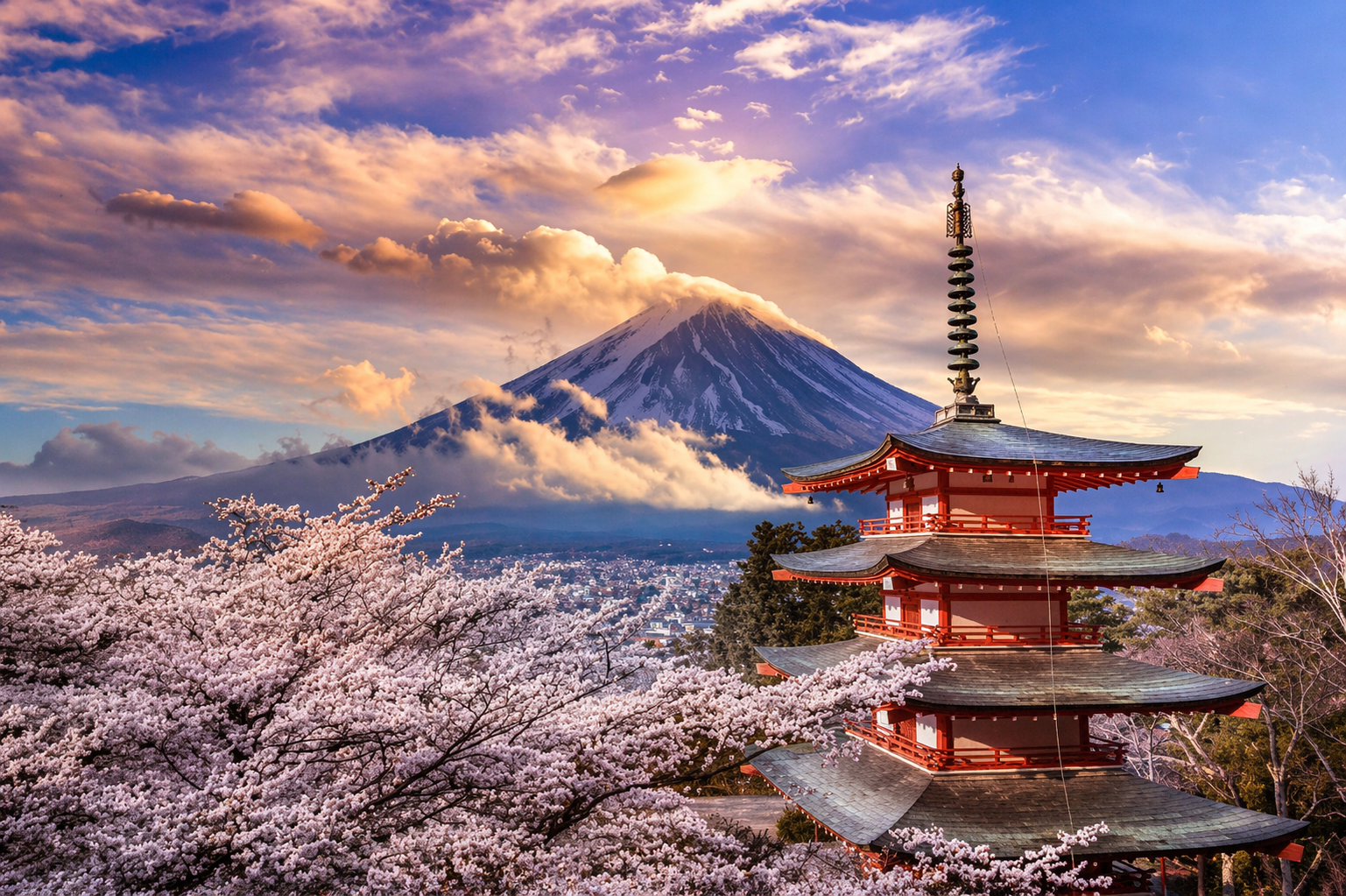
Tokyo to Mount Fuji Private Customizable Day Tour
Design your custom day trip to Mount Fuji and the scenic Five Lakes in a private vehicle with a multilingual guide.
Reserve
Hand-picked by our editors — only the best 5 private tours from 120 reviewed.
Verified partners for every tour, free cancellation where available, and instant confirmation on every booking.
11 hr
Design your custom day trip to Mount Fuji and the scenic Five Lakes in a private vehicle with a multilingual guide.
Reserve
10 hr
Design your ideal Mount Fuji day trip with a private guide, stunning lake views, and hotel transfers from Tokyo.
Reserve
11 hr
Design your own perfect day trip from Tokyo to Mount Fuji and Hakone in a private vehicle.
ReservePrices from verified partners. Availability updates in real time at checkout. Free cancellation policies apply where shown.
The landmarks, rooms, and views travelers on this tour remember — all visible on a single visit.
The primary entry point where gear is inspected and the 4,000 JPY fee is verified.
The high point where hikers can view the volcanic caldera at 3,776 meters.
Strategic rest stops along the path that allow for essential overnight acclimatization.
The bustling hub where most mt fuji private transfer tours originate and hikers prepare.
A challenging circular path around the summit crater providing 360-degree views.
Private vehicle services offer superior efficiency and comfort for those prioritizing time, whereas public transit provides a more economical approach for independent travelers. Most visitors who value direct summit access and minimal stress prefer the mt fuji private transfer.
| Feature | Top pick Private Transfer | Public Transit |
|---|---|---|
Flexibility |
Door-to-door custom schedule | Fixed timetables |
Travel Time |
2–3 hours average | 3–5 hours including transfers |
Cost |
25,000–50,000 JPY total | 2,500–5,000 JPY per person |
Convenience for Groups |
High capacity and privacy | Requires managing individual tickets |
Navigation Difficulty |
Minimal direct route | Multiple transfers and walking required |
Luggage Support |
Full door-to-door handling | Self-service storage required |
| See tickets → |
Verdict: Choosing between mt fuji private transfer tickets and local train lines depends on whether your priority is group convenience or budget-conscious mountain exploration.
Choose your ticket, select your date, and reserve in under two minutes. Secure checkout handled by our verified partner.
Instant confirmation by email, with a mobile voucher you can save offline. No printing, no queuing at a collection desk.
Arrive at the entrance, show your voucher on your phone, and walk in. Most tickets include priority or skip-the-line access.
Practical details for your visit straight from our verified partners — hours, access, rules, and how to get there.
Fujiyoshida City, Yamanashi Prefecture, Japan
Standard gate for most mt fuji private transfer services
Private transfer is the most reliable way to reach the 5th Station during peak hours.
Sturdy, ankle-supporting trekking shoes are strictly required for entry. Do not attempt the mountain in sneakers, sandals, or fashion footwear as inspectors will deny access.
Rangers at the gate perform gear inspections; you must carry proper rain gear (jacket and pants) and warm insulation. Booking a mt fuji private transfer helps manage transport logistics, but does not bypass safety gate requirements.
Photography is permitted throughout the ascent, though please avoid blocking narrow trails. Using a mt fuji private transfer allows you to capture images at the 5th Station without managing public bus crowds.
The climb is strenuous and not accessible for individuals with mobility impairments. A mt fuji private transfer provides the most controlled environment for accessing the trailhead.
Mobile service is available in many areas, but rely on offline maps and physical guides. Consider a mt fuji private transfer to maintain communication with your driver throughout the day.
The ascent is physically demanding and generally not suitable for young children. Families utilizing a mt fuji private transfer should prioritize the safety of all members during the strenuous climb.
Carry at least 2 liters of water and high-calorie snacks, as mountain hut supplies are limited and expensive. Organizing a mt fuji private transfer ensures you can stock up on supplies in Fujiyoshida City before your ascent.
Pets are strictly prohibited on the trails to protect the fragile volcanic ecosystem. Use a mt fuji private transfer to secure safe arrangements if you are traveling with companions who cannot hike.
The 4,000 JPY mandatory hiking/conservation fee must be paid in advance. A mt fuji private transfer simplifies your arrival logistics at the restricted gate areas.
Fujiyoshida City, Yamanashi Prefecture, Japan
Standard gate for most mt fuji private transfer services
Get directionsBest time to go, insider tips, nearby landmarks, and the cancellation fine print — flip through to skim what matters to you.
How crowds, weather, and events shift across the year.
July–September offers the only safe, maintained trail conditions and open mountain huts. Mid-August Obon week is the busiest period; aim for early July or September for better trail access.
Small details that turn a good visit into a great one.
Rangers check for shoes, rain gear, and warm clothes at the gate; failure to bring these results in denied entry.
Non-bookable sights within a short walk — free to visit, easy to pair.
Famous five-story pagoda offering iconic summit views.
Flexible, no hidden fees.
The mandatory 4,000 JPY hiking/conservation fee is non-refundable regardless of weather, altitude sickness, or early descent. Please confirm your specific mt fuji private transfer operator policies regarding trip adjustments due to mountain closures.
Hand-picked options within walking distance — pick a district for vibe, or a specific hotel for convenience.
Central base for all hikers and mt fuji private transfer guests.
Fuji-san has erupted at least sixteen times since the year 781, and the last of those eruptions — the Hōei event of December 1707 — dropped ash on Edo, a hundred kilometres away, for sixteen days. The cone that visitors photograph today is geologically young. It sits atop two older volcanoes, Komitake and Ko-Fuji, buried beneath roughly 10,000 years of accumulated basalt. The mountain was closed to women until 1872. Before that, pilgrims of the Fujikō confraternities walked from Edo in white robes, climbing through the night to greet goraikō, the sunrise seen from the summit. Their routes still exist. The Yoshida Trail, which begins in Fujiyoshida City in Yamanashi Prefecture, follows the same ascent line those pilgrims used, past stone-walled huts and the torii gates of Fuji Sengen Shrine. UNESCO inscribed the mountain in 2013 not as a natural site but as a cultural one — a place of worship and a source of artistic inspiration. Hokusai's Thirty-Six Views fixed its silhouette in the global imagination two centuries ago. That cultural weight explains the modern administrative reality. Access is regulated. Trail gates operate 03:00–14:00 daily, and a mandatory hiking and conservation fee of 4,000 JPY per person applies, funding trail maintenance and altitude-sickness response. Numbers are capped. The official climbing authority publishes conditions at https://www.fujisan-climb.jp/en/, and the Fujiyoshida office can be reached at +81-555-72-1477. Distance is the practical obstacle. The Yoshida trailhead sits roughly 110 kilometres from central Tokyo, and public transport does not run early enough to meet a pre-dawn gate. A mt fuji private transfer solves an ordinary logistics problem: a vehicle that departs when the mountain requires, not when a timetable permits. The private Mount Fuji day tours from Tokyo listed on this page are built around that constraint, several pairing Yamanashi with the Hakone caldera and the Owakudani sulphur vents to the south. The mountain rewards the effort with something specific. Its near-perfect stratovolcanic symmetry — 3,776 metres, visible from Tokyo on clear winter mornings — comes from a single vent erupting fluid basaltic andesite in even sheets. Few volcanoes on earth are so regular. The five lakes at its northern base, Kawaguchiko among them, were formed when lava flows dammed ancient rivers. Choosing a mt fuji private transfer tour is, in the end, a choice about arriving on the mountain's schedule rather than your own.
"UNESCO inscribed Fuji-san in 2013 not as a natural site but as a cultural one."
A step-by-step walkthrough of the visit — what you'll see, how long each stage takes, and the details that matter.
You leave your Tokyo hotel lobby in the dark, usually somewhere between 22:00 and 01:00, and the driver loads your pack while the street is still empty. The Chuo Expressway runs clear at that hour. You watch convenience-store lights thin out, then vanish, and the road begins to climb. You reach the Fifth Station at around 2,300 metres. Gates open at 03:00, and you pay the 4,000 JPY conservation fee at the checkpoint before stepping onto the Yoshida Trail. The first hour is loose volcanic gravel. You pass mountain huts selling hot corn soup, stamp your walking stick with branded irons at each station, and stop where the tree line ends and the cinder slope begins. Above you, headlamps thread upward in a single line. If you are not climbing, the transfer takes a different shape. You spend the 03:00–06:00 window at Lake Kawaguchiko instead, where the summit reflects on still water before the wind picks up. You photograph the Chureito Pagoda's five tiers with the cone behind them. By 09:00 you are at Oshino Hakkai, drinking spring water filtered through eighty years of lava. Your driver waits where you left him. On a Fuji-san private car service, the itinerary bends to what the light is doing, and you return to Tokyo before the expressway fills again.
The trails open daily from 03:00–14:00 for the official climbing season.
A mt fuji private transfer tour helps with transport, but the 4,000 JPY fee is a separate mandatory conservation charge.
No, you must respect the 03:00–14:00 entry window and gate closures from 14:00–03:00.
All hikers must pay a mandatory 4,000 JPY hiking/conservation fee per person.
Sneakers, sandals, and drones are strictly prohibited; please check gear before arriving for your mt fuji private transfer.
The Yoshida Trail is best for beginners, but a mt fuji private transfer is recommended for those wanting stress-free logistics.
Bring waterproof rain gear, warm layers, and high-calorie food, even if using a mt fuji private transfer service.
Yes, photography is encouraged; your mt fuji private transfer driver can drop you at the best viewpoint locations.
The official address is Fujiyoshida City, Yamanashi Prefecture, Japan.
No, your mt fuji private transfer cost typically covers transit; the 4,000 JPY fee must be paid separately via the official portal.